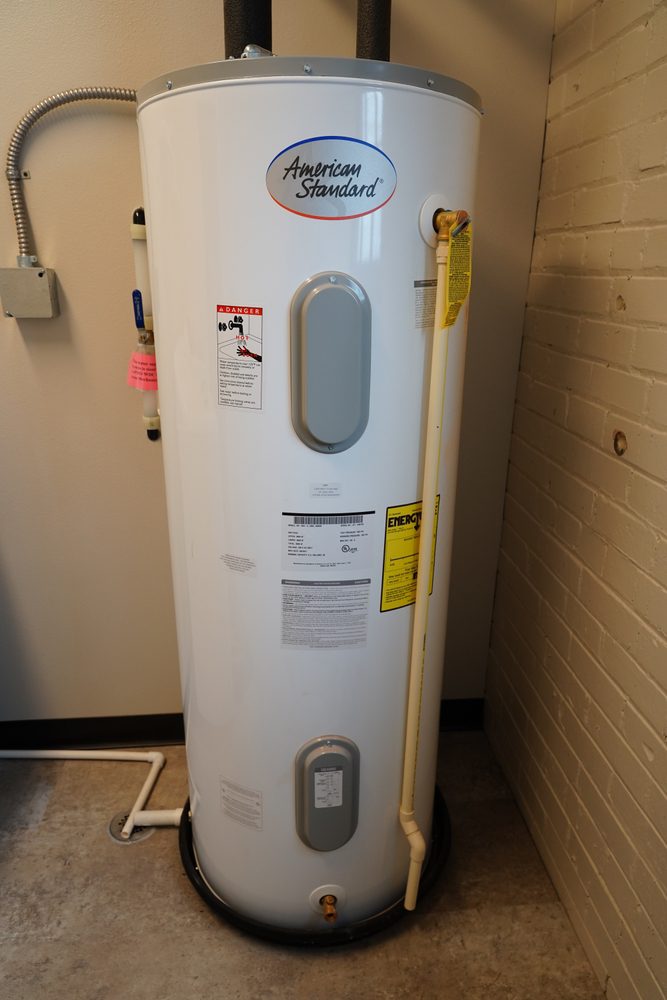
As the weather cools, your water heater has more work to do. The water coming into your home is colder, and you may also use more hot water for showers, laundry, dishes, and other everyday needs.
That is why fall is a good time to ask: Is your water heater ready for cooler weather? A quick inspection and some routine maintenance can help you spot problems before they turn into a leak or a loss of hot water.
Start with an initial visual check of the water heater. You do not need to take anything apart to check for possible problems.
Look for:
- Water around the bottom of the water heater
- Moisture on pipes or fittings
- Corrosion or rusting
- Rumbling, popping, or cracking noises
- Hot water that has grown less hot
- Not enough hot water for your family’s needs
In addition, keep the area around the water heater clear. This makes the unit easier to inspect and allows you to turn the water heater off in case you need to.
If you see a serious leak, exposed wiring, the smell of burning plastic, or the smell of gas, don’t try to repair the water heater yourself. Call a plumber immediately!
A traditional tank water heater may develop sediment on the bottom of the tank because minerals from the water tend to settle there over time, making the heating process more difficult. Sediment can also contribute to the popping or rumbling sounds you may hear from an older unit.
Flushing the tank removes some of that buildup. Many water heaters benefit from annual flushing, while homes with hard water may need more frequent maintenance. Regular flushing is one of the common water heater maintenance steps used to reduce sediment buildup. Flushing includes working with hot water, plumbing fixtures, and sometimes with the gas/electrical part of the water heater. If you are not comfortable doing the work yourself, we recommend having a professional plumber handle it.
There are two parts in the tank of a water heater that may be easily ignored, and those are the anode rod and the temperature and pressure relief valve.
The anode rod helps protect the inside of the tank from corrosion. The rod wears down over time, so we check its condition during water heater maintenance and replace it when needed.
The temperature and pressure relief valve, or T&P valve for short, is the part that is used for releasing pressure if there is too much pressure in the tank.
Both components are quite significant to ensure safe use of a water heater, so we would advise you to have a plumber take a look at them instead of trying to open them yourself.
Your water heater does not need to be set as high as possible to provide enough hot water.
A setting of about 120° F is ideal for most homes. This will ensure you receive plenty of hot water while minimizing the chances of scalds and wasted energy.
Every home has its own requirements, and you should refer to the manufacturer’s instructions before making any changes to the temperature. If the water temperature changes without any change in settings, contact us for an inspection.
Older water heaters tend to experience heat losses through the tank when placed in cold locations like the garage or the basement.
In such cases, more insulation may help prevent these heat losses. But you should not insulate your tank without first confirming whether it is right for your particular heater or not. Controls, vents, and other components should never be covered.
Insulating accessible hot water pipes can help reduce heat loss from the water heater to your faucets. Setting the correct temperature and repairing hot water leaks are simple ways to improve water heater efficiency.
Tankless water heaters have different maintenance requirements compared to traditional tanks.
Without a storage tank, you won’t get the sediment buildup you find in traditional tank water heaters. However, there might be some mineral scale buildup in the heat exchanger depending on the hardness of the water supply.
Maintenance of a tankless water heater also depends on the type of tankless heater and the water supply quality. We can do an inspection and give recommendations for the required maintenance of your tankless water heater if you are not sure about what is required.
Your water heater is probably one of those things that is easy to overlook, especially when it is doing its job just fine. A little something out of the ordinary, like an odd noise, a leaking water heater, or not enough hot water, should get your attention.
At Putman Plumbing, we service both tank and tankless water heaters throughout Frederick and Washington counties, including routine flushing and cleaning, repairs, and replacements. If you have an issue with your water heater or aren’t sure about the maintenance it needs, contact us, and we can take a look.